
For the first Würzburg LabVIEW User Group meeting of 2026, we stirred things up and introduced a new format: NI’s hands-on demo stations during the day followed by the usual evening user group presentations. A sure recipe for success!

The event brought together members of the local LabVIEW community, industry partners, and NI representatives for an afternoon and evening focused on practical experimentation, technical discussion, and community exchange. A big shout-out goes to both dataTec and NI for supporting us with manpower, content and budget for catering – THANK YOU!
Welcome from dataTec AG
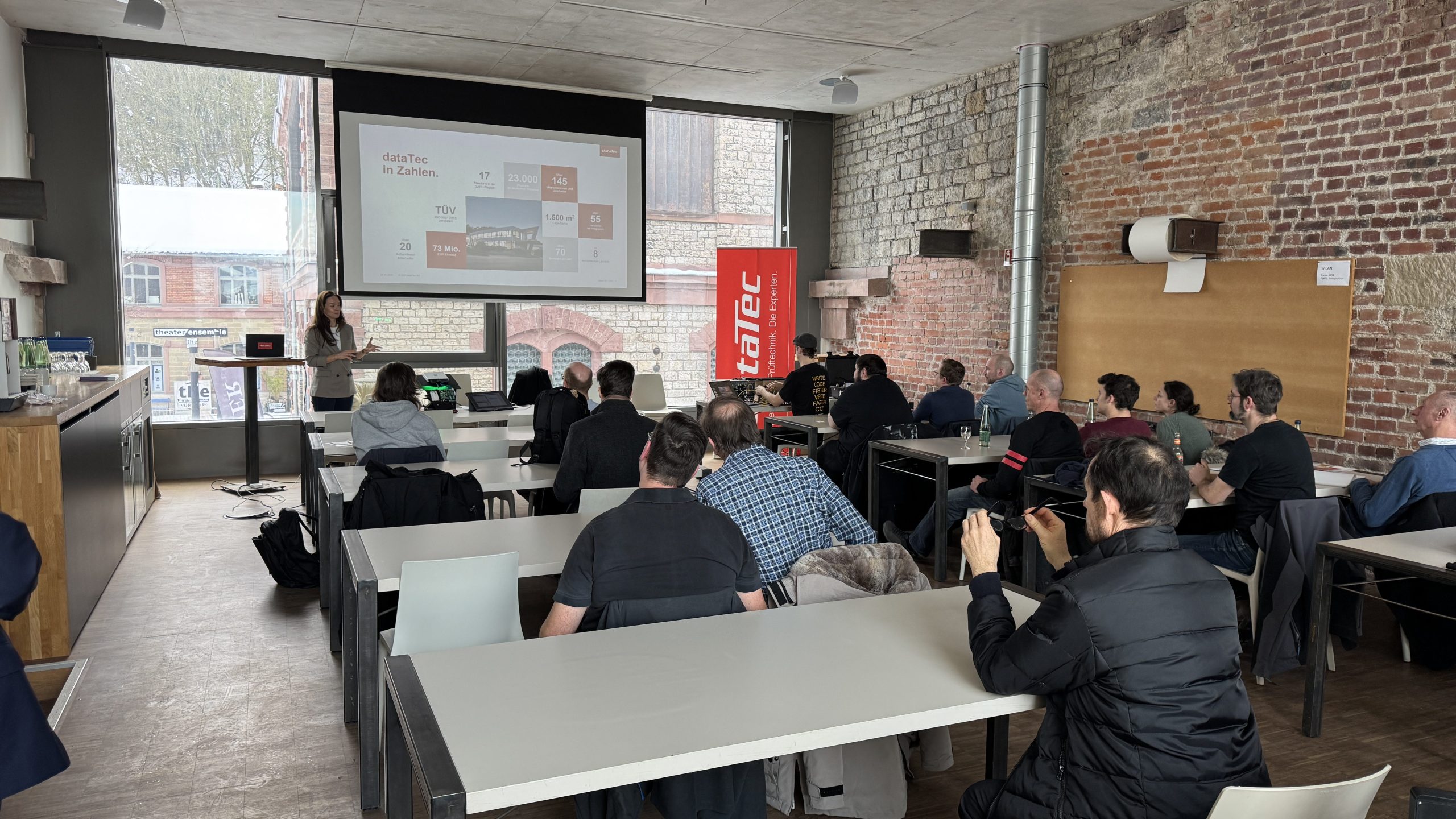
WUELUG26 kicked off with an introduction from dataTec AG. Laura Le Cam welcomed the group and set the stage for the discussions ahead. Later in the evening, Laura’s colleague Norbert Pilz provided an overview of their role as a distributor for NI products, highlighting how they support customers across industries with consulting during system layout, procurement, and long-term service.
Following this, the Hector Esteban, the NI Sales Area Manager for Bavaria presented the strategic outlook of NI and its roadmap for the coming years. NI will aim for more product innovation, country focused resources and community events. The focus for the 2020s is clearly centred on improving development workflows, easing data access, and integrating AI into engineering and testing environments.
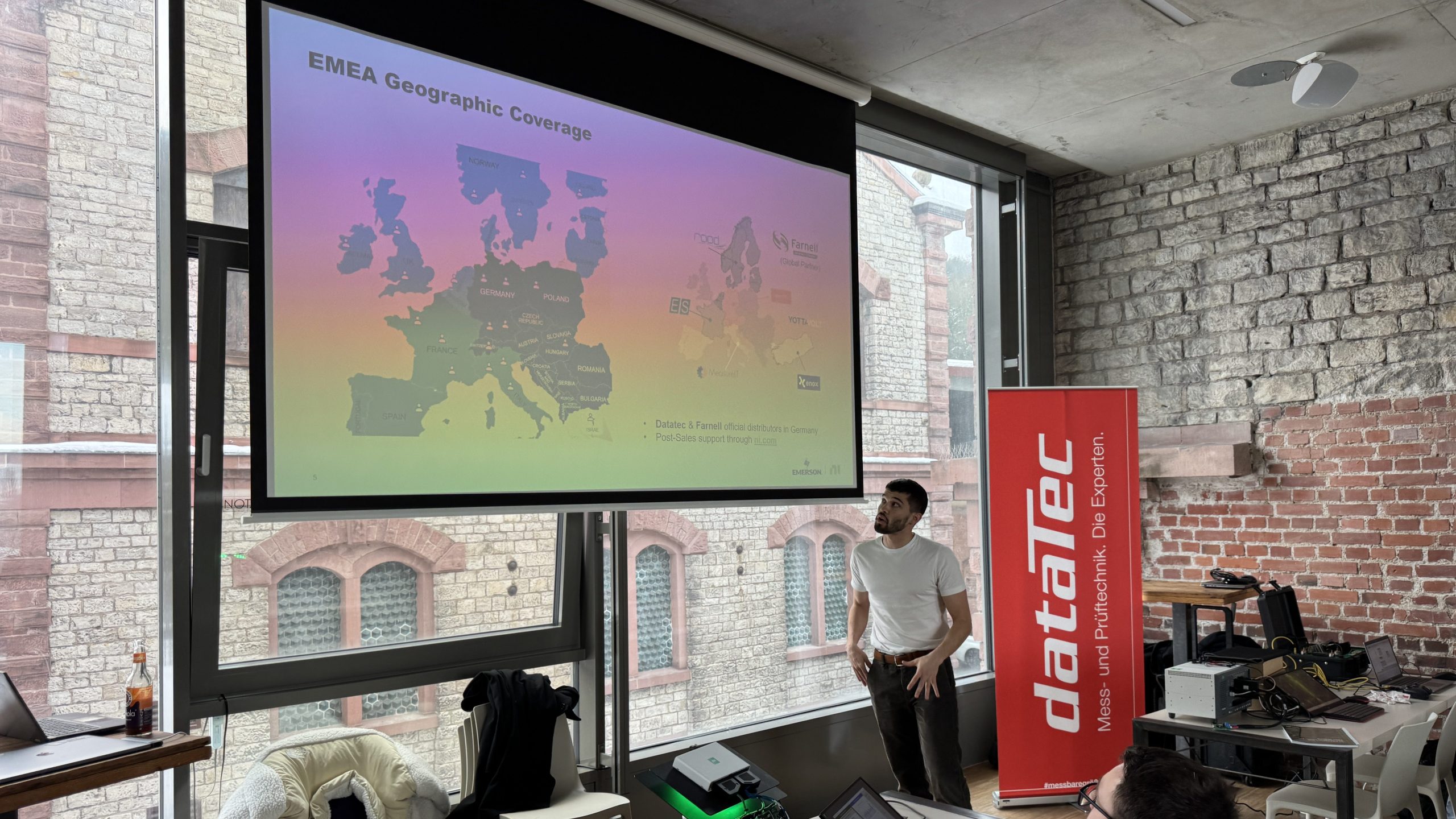
In addition, test-based development was highlighted as a key priority. System security also plays a central role in the roadmap, reflecting increasing regulatory requirements and the growing importance of protecting complex, connected systems. Closely linked to this is the implementation of SBOMs (Software Bill of Materials), which enhance transparency and traceability within software ecosystems. Also, deeper integration for other programming languages is planned.
Demo Days: Hands-On Experiments
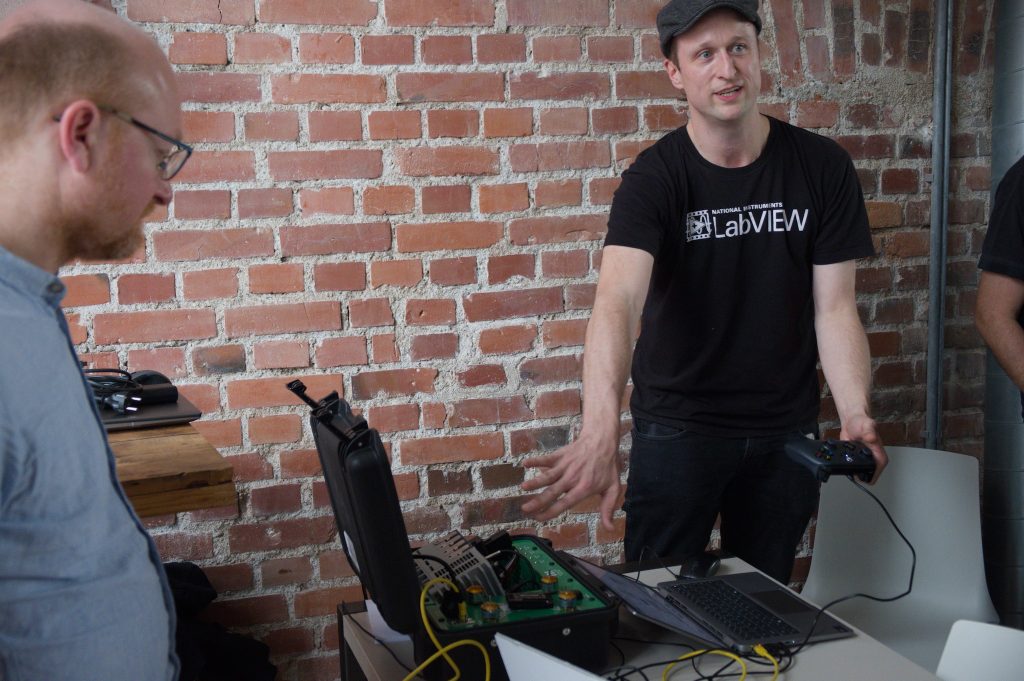
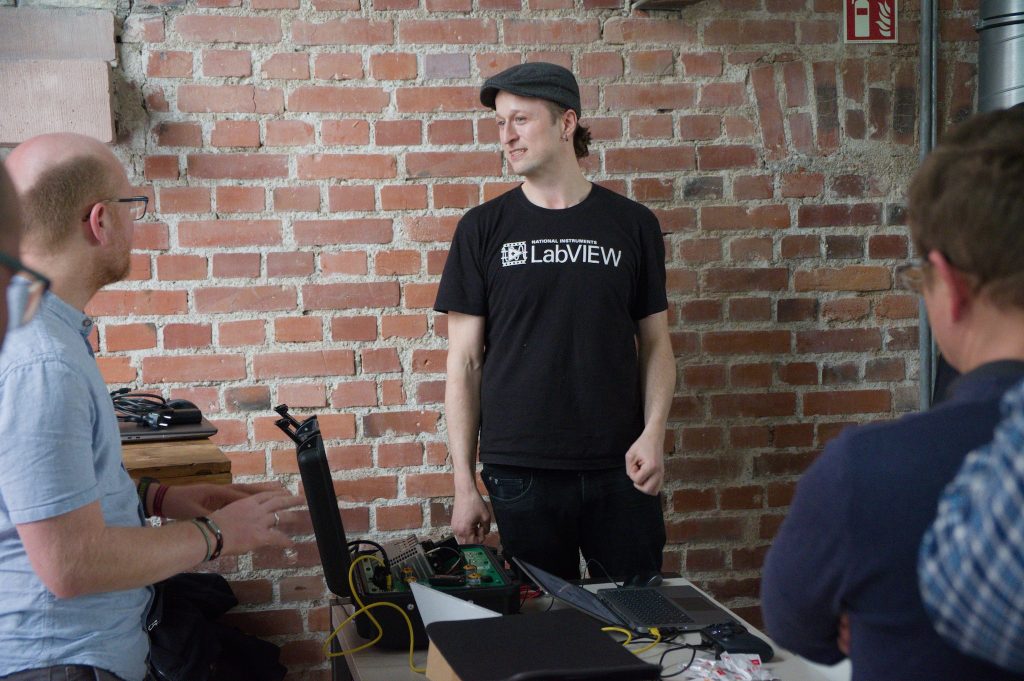
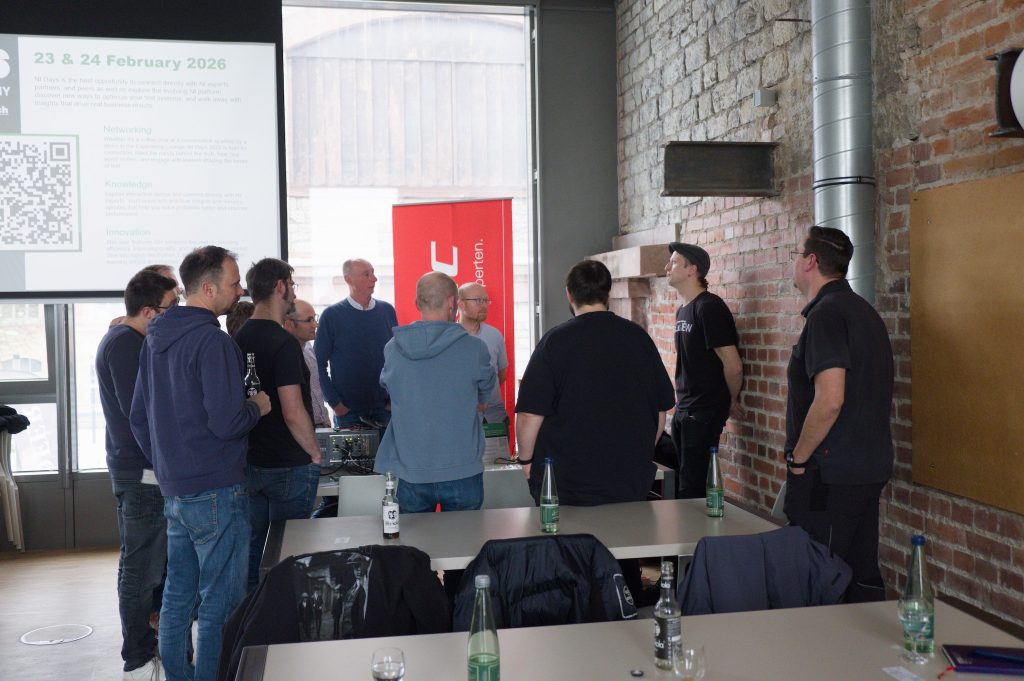
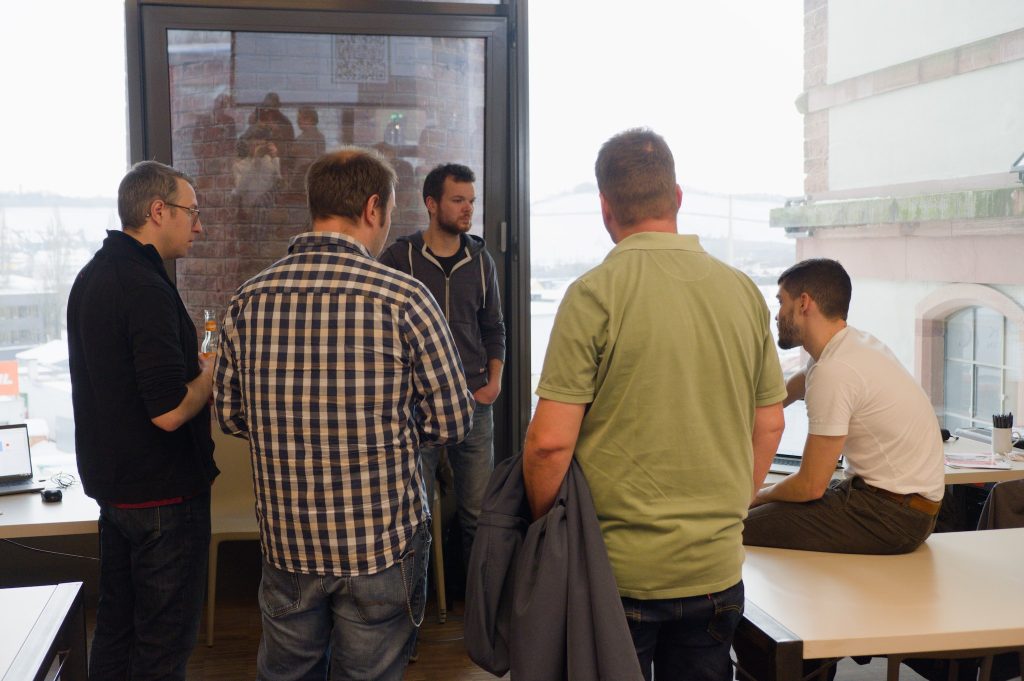
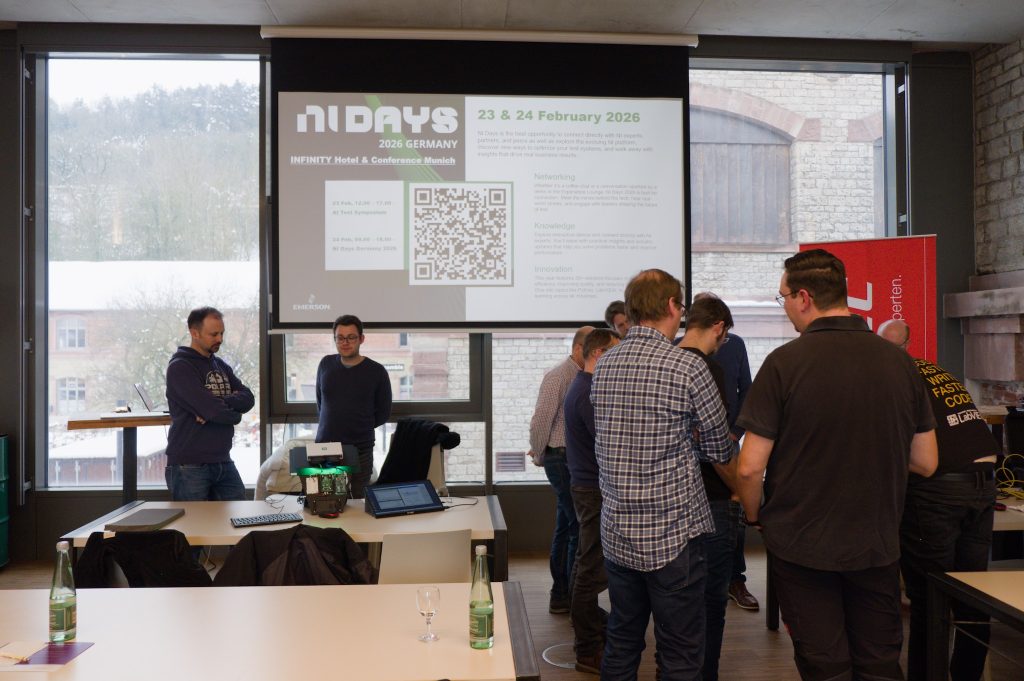
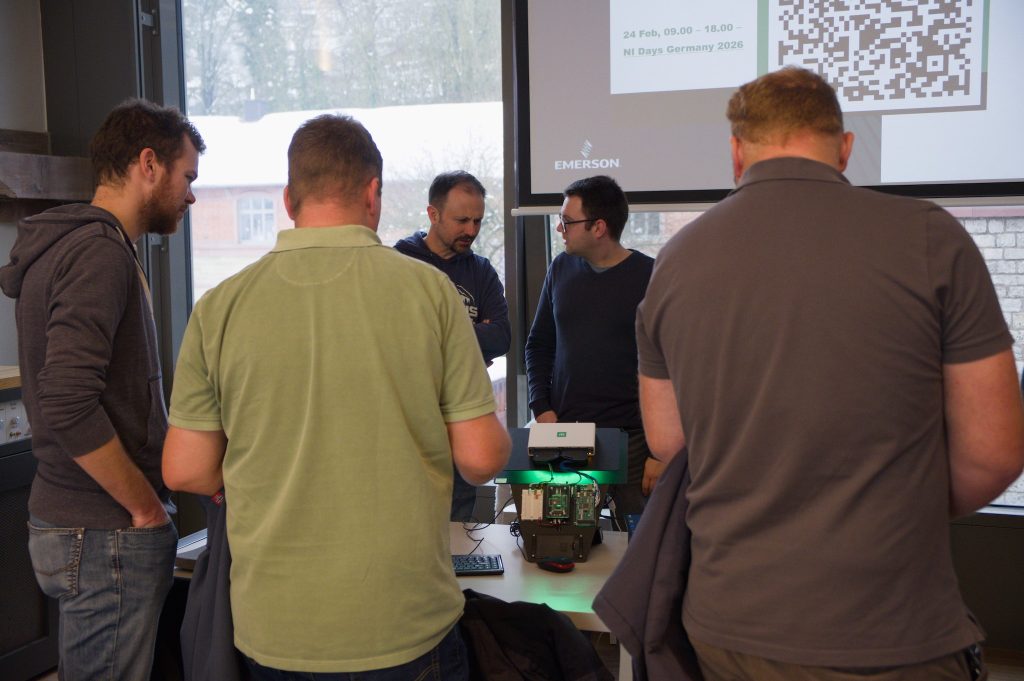
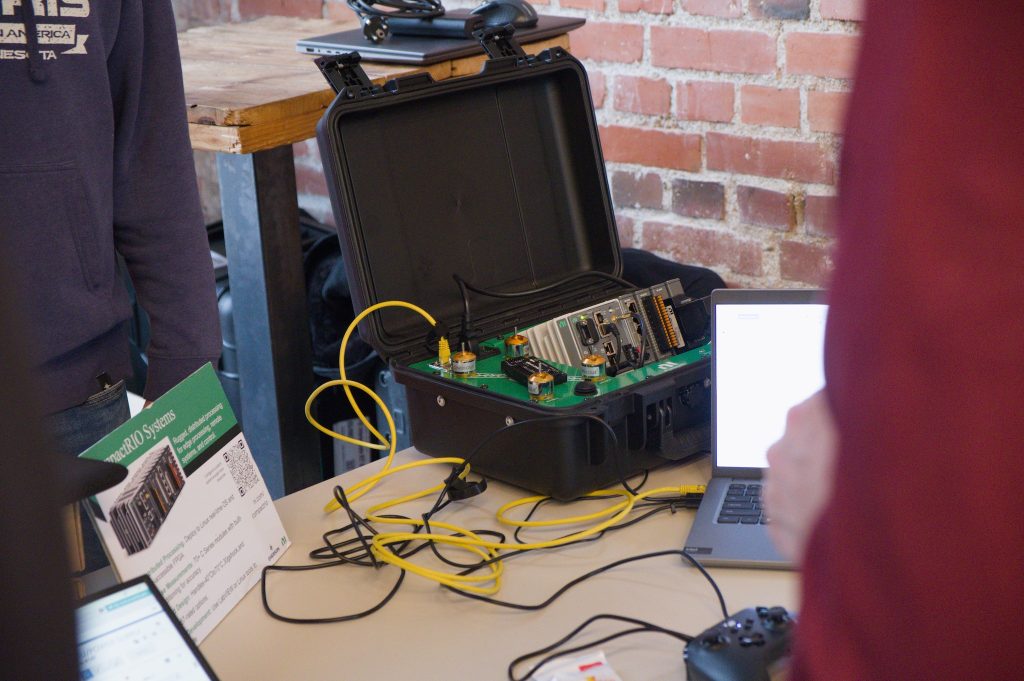
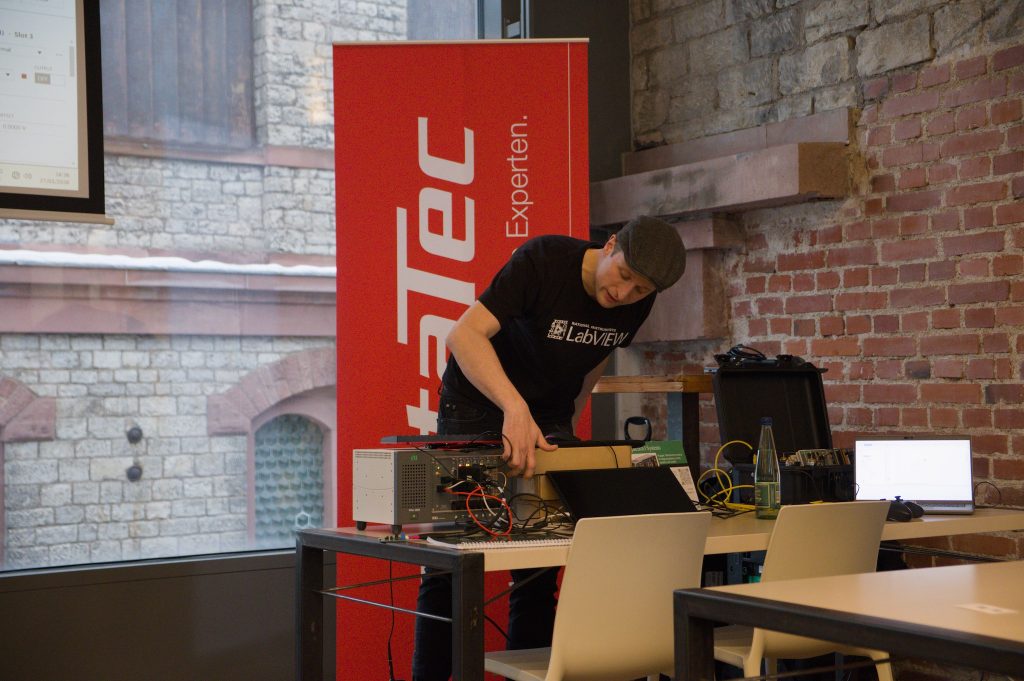
The centerpiece of the event was the Demo Day format: four interactive demo stands where participants could explore hands-on examples of measurement and control systems. Each station demonstrated a different aspect of modern test and measurement applications. Together with his colleagues, NI’s Jan Göbel led through the stations.




Levitating Ping-Pong Ball
One of the most eye-catching demonstrations featured an air-jet levitated ping-pong ball.
Using controlled airflow and a feedback loop, the system continuously adjusted the air stream to keep the ball suspended in midair. The setup illustrated real-time control principles and showed how measurement signals can be acquired, processed, and visualized with minimal latency.
Drone Simulation
Another station presented a simulated drone system.
Here, participants could observe how dynamic models can be monitored and controlled in real time. The demonstration provided a clear example of how simulation, control algorithms, and measurement systems interact in complex systems.
LabVIEW on SBC Platforms
A third stand focused on Single-Board Computers (SBCs), demonstrating how LabVIEW integrates with platforms such as Raspberry Pi and Arduino.
The demo highlighted how these compact systems can be used in rapid prototyping setups or embedded measurement environments while still benefiting from the LabVIEW ecosystem.
More Hands-On Exploration
Across all stations, the interactive format encouraged discussions and experimentation. Rather than simply watching presentations, attendees could directly interact with the setups, ask questions, and exchange ideas with the developers behind them.
WUELUG26 Proper
After the demo sessions concluded, the event transitioned into the traditional WUELUG presentation format.

gRPC in the LabVIEW Ecosystem
The first presentation focused on NI’s gRPC technology.
Remote Procedure Call (RPC) mechanisms allow a program to execute functions on another process or computer as if they were local calls. gRPC builds on this concept with a modern, language-agnostic framework based on protocol buffers.

Within the LabVIEW ecosystem, this enables strongly defined interfaces where client and server code can be generated directly from interface definitions. This approach simplifies communication between distributed components and allows LabVIEW systems to integrate more easily with services written in other programming languages.
Productivity Tools in the LabVIEW IDE
The second presentation shifted the focus back to everyday developer productivity and highlighted several powerful but sometimes underused LabVIEW tools:
- VI Scripting for automating tasks inside the LabVIEW IDE
- VI Analyzer for automated code quality checks and guideline enforcement
- Quick Drop as a powerful navigation and productivity feature
These tools can significantly improve developer efficiency and code quality when integrated into daily workflows.

What’s Next for WUELUG?
As always, the evening concluded with discussions about future topics and events. Ideas mentioned included:
- CLD preparation sessions
- point-based recertification opportunities
- upcoming NI Days events
- GDevCon and other community conferences
With the combination of hands-on demos, roadmap insights, and community-driven presentations, WUELUG26 once again demonstrated what makes the user group valuable: practical knowledge sharing and an engaged local LabVIEW community.
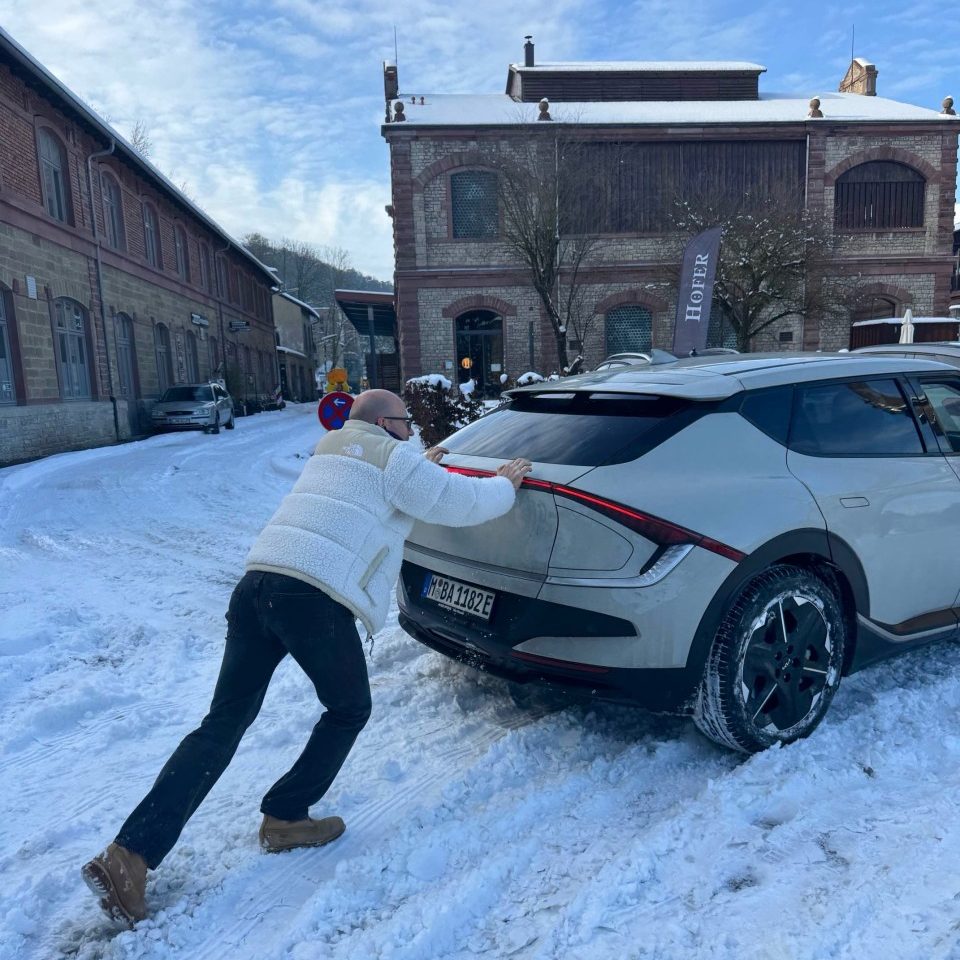
We’ll keep on pushing – quite literally, as you can see – for more community, more knowledge transfer, more collaboration, and more fun!